Uncategorized
Essential Nutrition: What Should Your African Grey Eat?
Apr
African Grey parrot diet :Essential Nutrition: What Should Your African Grey Eat?
When you bring home a Congo African Grey for sale, you aren’t just taking on a pet; you are becoming the personal chef for one of the most metabolically unique birds on the planet. Unlike many other parrot species, African Greys have a high demand for specific nutrients to maintain their incredible cognitive function and feather health.
At Exotic Parrot Store, we believe that “food is medicine.” A bird on a proper diet will live for 60 years, while a bird on a poor diet may struggle with health issues by age ten. Here is the ultimate guide to fueling your “Einstein of the bird world.”
1. The Myth of the “Seed Only” Diet
For decades, the standard African Grey parrot diet consisted of sunflower seeds and peanuts. We now know this is a “death sentence” for these birds.
- Malnutrition: Seeds are high in fat but dangerously low in Vitamin A, Calcium, and essential minerals.
- Fatty Liver Disease: A seed-heavy diet leads to obesity and organ failure.
- The Goal: Seeds should only make up about 5-10% of their total intake and should be used primarily as training rewards.
2. The Foundation: High-Quality Pellets
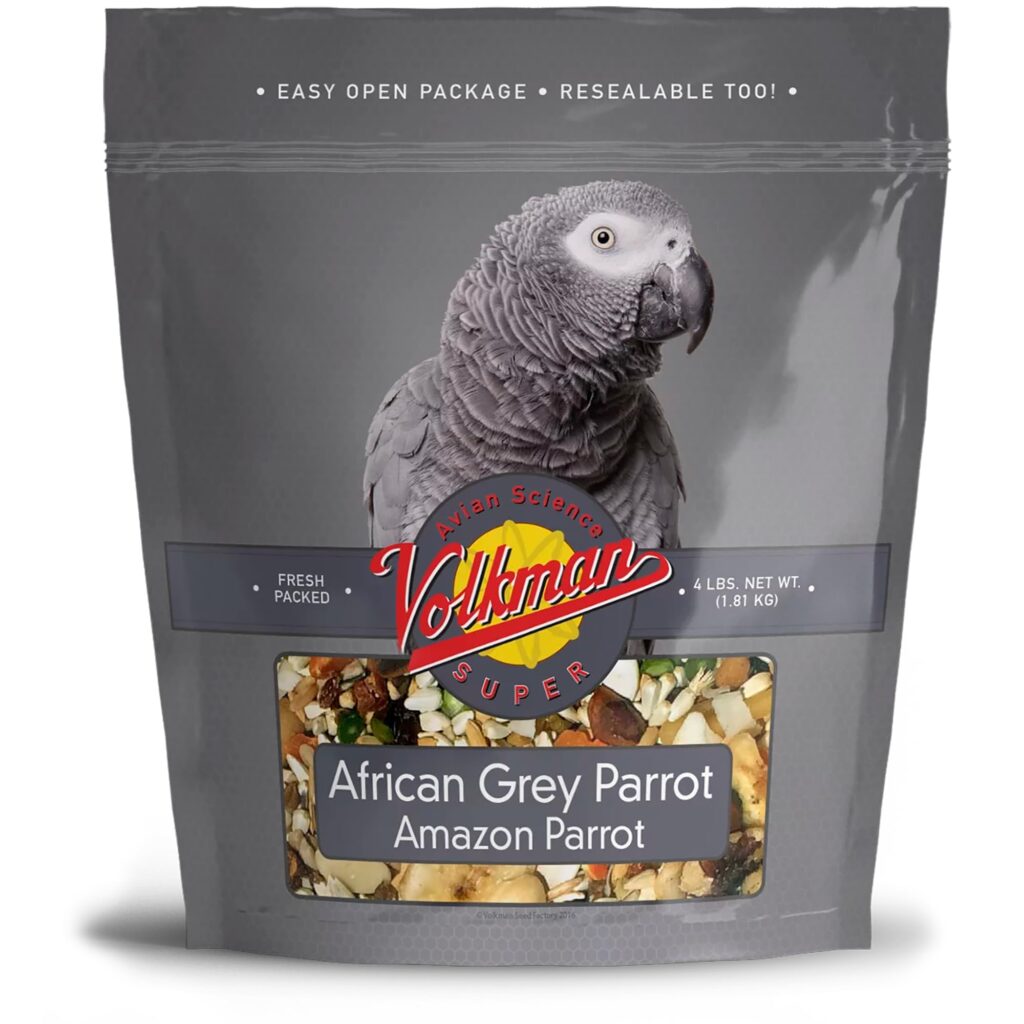
A formulated organic pellet should make up roughly 60-70% of your bird’s daily intake.
- Balanced Science: Pellets are engineered to provide the exact ratio of vitamins and minerals your bird needs.
- No Picky Eating: Unlike seed mixes where a bird can pick out the “tasty” (unhealthy) bits, pellets ensure they get a balanced bite every time.
- Recommended Brands: We suggest using high-potency organic pellets specifically formulated for medium-to-large parrots.
3. The “Chop” Method: Fresh Veggies & Fruits
Fresh food should be provided every morning. Many owners use the “Chop” method—a finely diced mixture of healthy ingredients.
- Focus on Vitamin A: Greys need beta-carotene for eye and feather health. Include sweet potatoes (cooked), carrots, and kale.
- Calcium-Rich Greens: To support their unique needs, feed broccoli, dandelion greens, and bok choy.
- Fruit in Moderation: Fruits like blueberries, apples (no seeds!), and papaya are great but should be limited due to their sugar content.
4. The African Grey’s “Secret” Requirement: Calcium
If there is one thing that sets the Congo and Timneh African Grey apart, it is their tendency toward hypocalcemia (low calcium levels).
- Why it matters: Low calcium can lead to seizures, heart issues, and “stargazing” behavior.
- How to supplement: In addition to calcium-rich veggies, providing a cuttlebone or a mineral block in their African Grey parrot cage is essential. Occasionally, a small piece of hard-boiled egg (with the shell crushed up) provides a natural calcium and protein boost.
5. Foods to Avoid (The “Never” List)
To keep your Grey African parrot safe, never feed them the following:
- Chocolate & Caffeine: Both are toxic to birds.
- Avocado: Contains persin, which is fatal to parrots.
- Onions & Garlic: Can cause anemia.
- Salt & Sugar: Birds cannot process processed human seasonings.
- Apple Seeds: These contain trace amounts of cyanide.
Start with a Healthy Foundation
At Exotic Parrot Store, our weaning process involves introducing our babies to a wide variety of “Chop” and premium pellets before they ever leave our nursery. This ensures that when you buy a baby African Grey for sale from us, they are already adventurous eaters with a strong nutritional start.
